
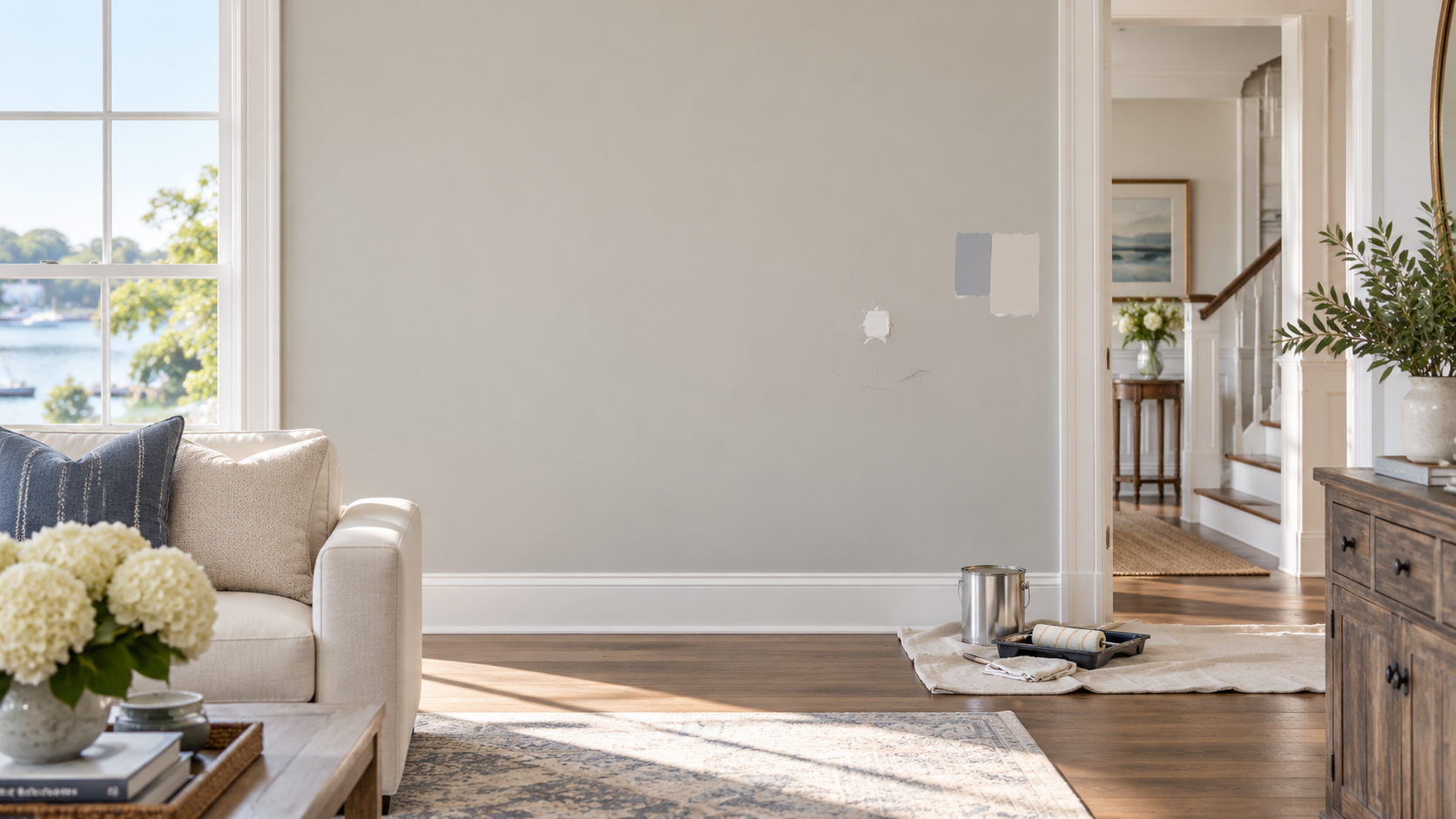
Paint Touch-Ups in Darien, CT start with a scope decision: can the mark be addressed locally, or would repainting the complete wall give a more consistent appearance? For a homeowner, the useful answer is the smallest scope that can reasonably meet the agreed finish expectation—not automatically the largest repaint.
Start With the Wall You Actually See
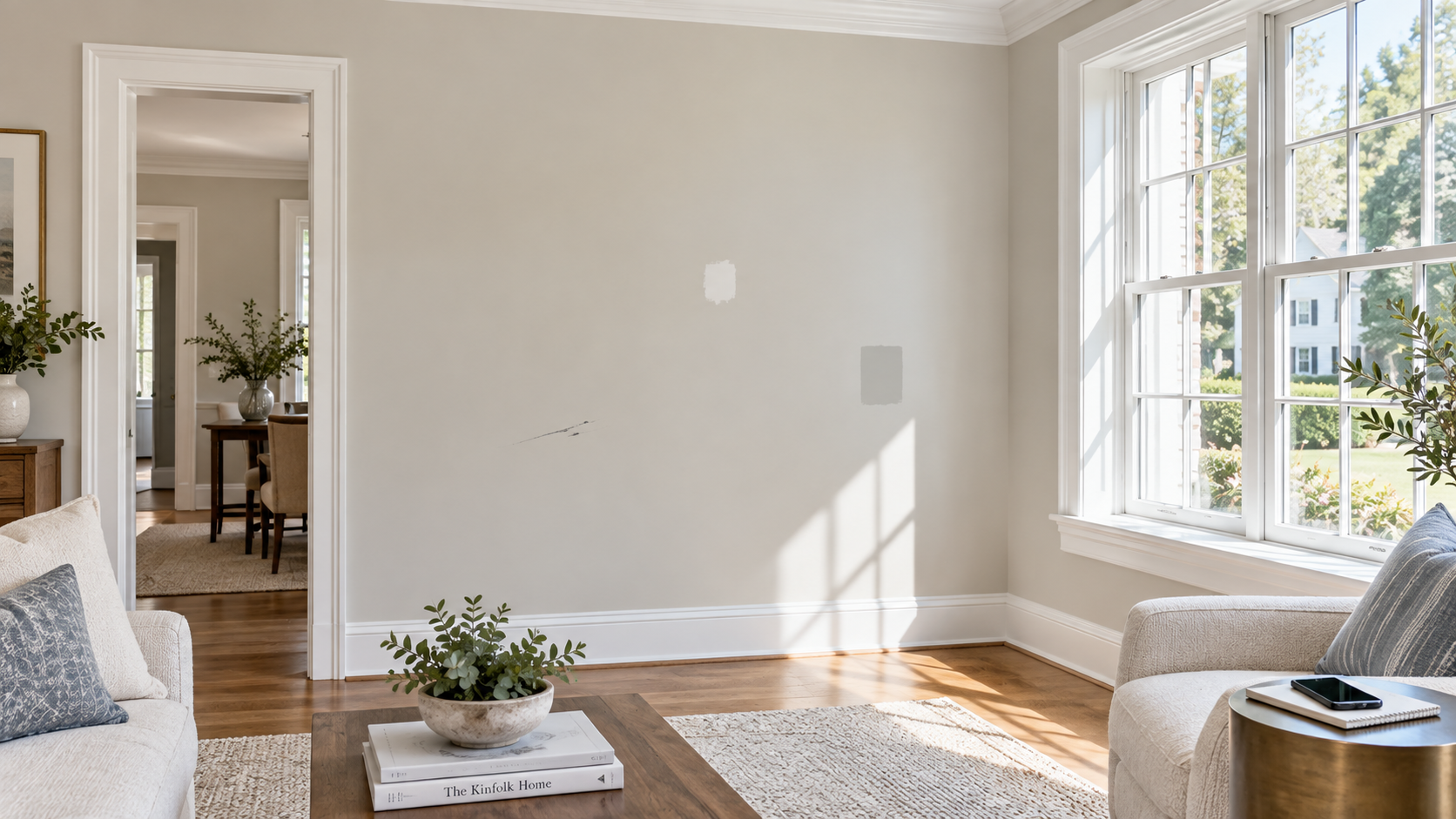
Before requesting work, identify where the mark sits and when it becomes noticeable. A wall beside a window may look different from the same wall under evening lighting.
Take one photograph of the whole wall and one of the affected area, then explain whether the problem is a scuff, a repair patch or a previous paint touch-up.
Record the paint information you still have: product, color, sheen and approximate application date. Matching the color name alone does not establish that a new application will blend with the existing surface.
Sherwin-Williams discusses matching color, sheen and texture and notes that a complete wall repaint may be appropriate when blending is unsuccessful. See its paint touch-up guidance.
Compare Three Possible Scopes
| Scope | Question It Should Answer |
| A localized touch-up | Can the affected area blend acceptably with the surrounding finish after an appropriate assessment? |
| One complete wall | Would using the wall’s natural boundaries avoid leaving a visible patch in the middle of a continuous surface? |
| A room or connected area | Are there separate reasons to expand the work, such as multiple affected walls or a planned change of color? |
One unsuccessful touch-up is not proof that every room needs painting. Ask the painter to identify the boundary of the proposed work and explain why the smaller alternative would or would not meet your expectations.
Define What “A Good Match” Means to You
A finish you are comfortable with in a utility room may not be acceptable on a prominent living-room wall.
Describe the viewing conditions that matter to you: normal standing position, daylight, evening lights or a close view beside a doorway. Agree on how any proposed sample or test area will be assessed before expanding the scope.
Important details to share include:
- Room and wall: identify the exact location.
- Visible issue: describe the mark without guessing its cause.
- Existing coating: share the label or previous specification if available.
- Desired outcome: state whether a small visible difference would be acceptable.
- Boundaries: confirm whether adjoining trim, ceilings and other walls are included.
When Paint Alone Is Not the First Decision
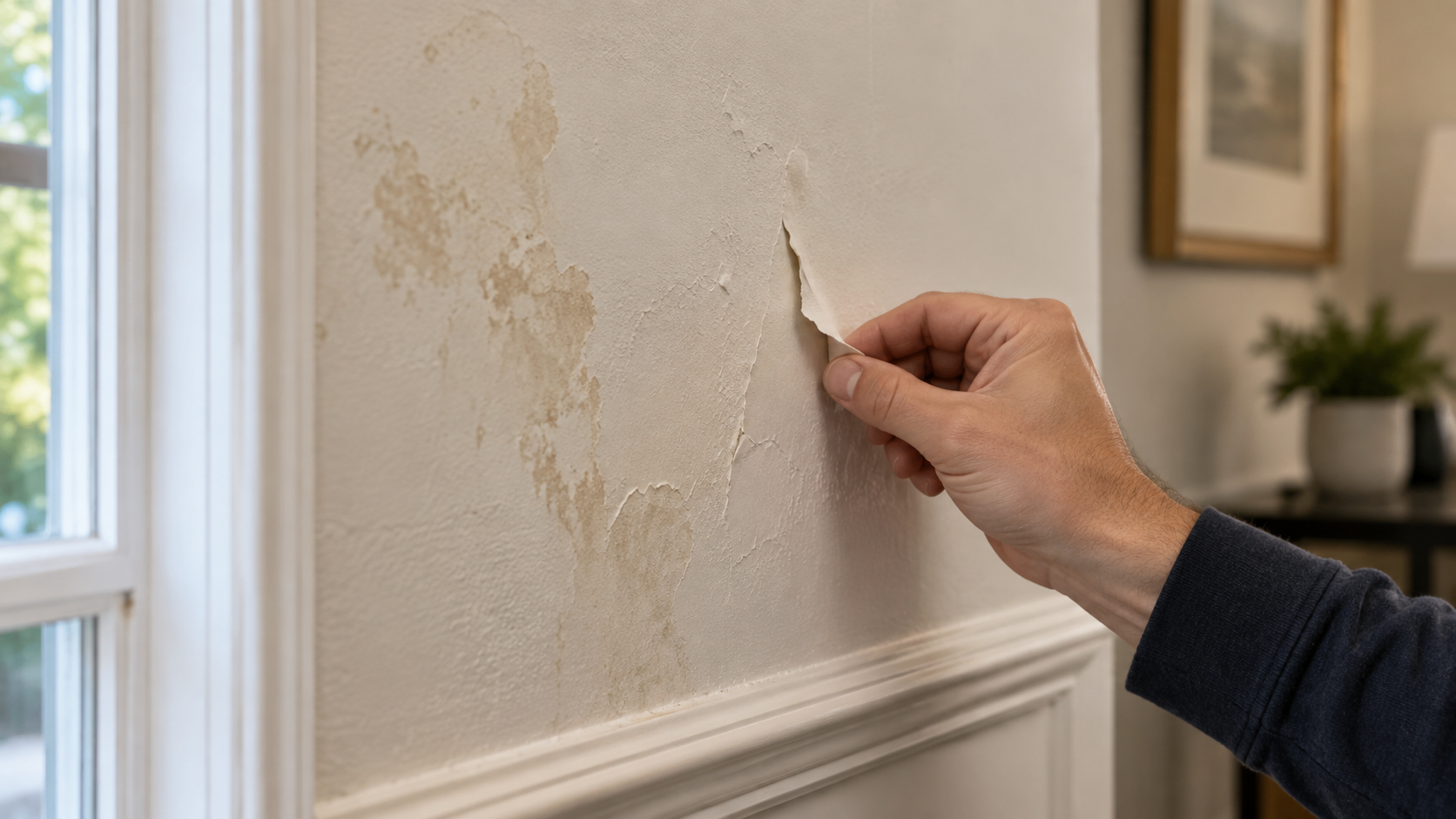
If a stain returns, the surface is damp, or the coating is actively peeling, ask for the underlying condition to be assessed before treating the issue as a color match.
This guide is not an instruction to scrape, sand or investigate an unknown coating yourself.
For work that disturbs painted surfaces in a pre-1978 home, review the EPA’s lead-safe renovation guidance and discuss appropriate precautions with a qualified professional.
Paint Touch-Ups in Darien, CT FAQs
Does having the original paint guarantee an invisible touch-up?
No. The existing surface and the new application still need to be assessed together. Keep expectations tied to the actual wall rather than a guaranteed invisible repair.
Does a request for a small repair guarantee that it can be scheduled?
No. Share the location and scope first so the company can confirm whether the work fits its service and scheduling arrangements.
Discuss the Right Scope for Your Darien Home
Explore Regal Line House Painters’ interior painting services and painting services in Darien.
When you get in touch, include the affected surfaces, any paint information you have and the result you want to achieve.