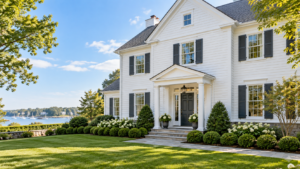
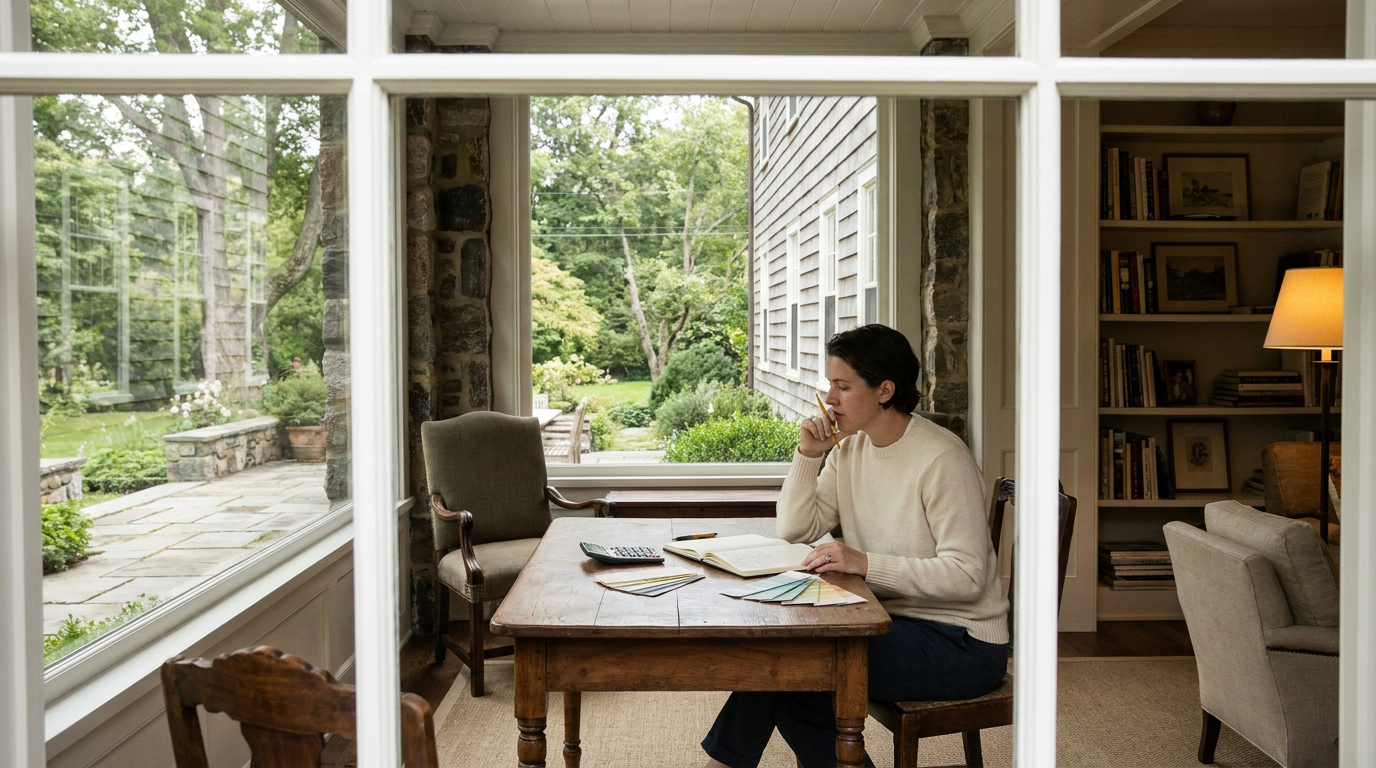
House painting budget planning in Fairfield County, CT should start with project type, scope, surface condition, prep needs, materials, timing, and finish expectations. A few room updates require a different budget conversation than a full exterior repaint, cabinet painting project, deck staining, or whole-home refresh.
For homeowners in Greenwich, Darien, Westport, Fairfield, New Canaan, Stamford, Norwalk, Wilton, and Ridgefield, the best budget plan is not just a rough number. It is a clear understanding of what needs to be painted, what condition the surfaces are in, and what level of finish the home deserves.
Start With the Type of Painting Project
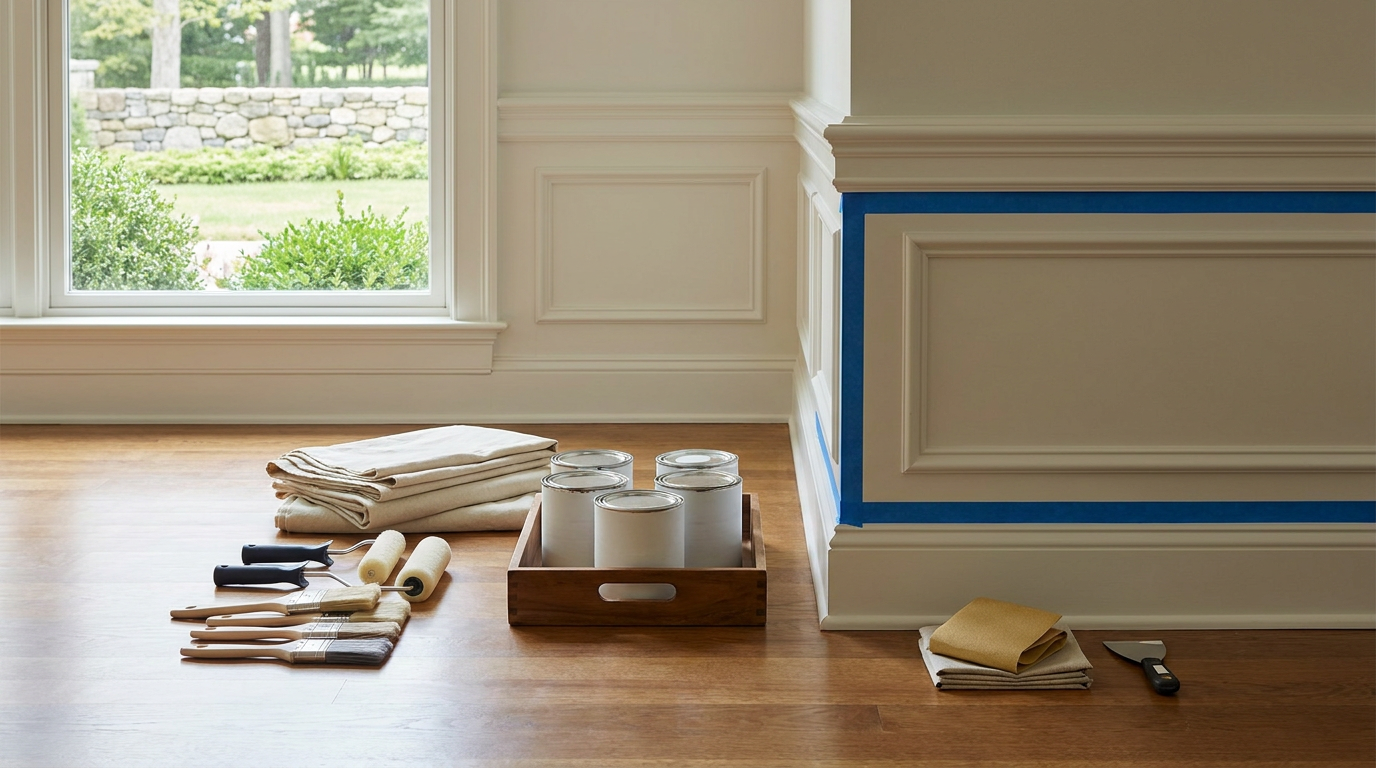
The first step in planning a house painting budget is identifying the type of project. Interior painting, exterior painting, cabinet painting, deck staining, drywall touch-ups, and full residential repaints all have different cost drivers.
A budget becomes more accurate when the project is grouped correctly from the beginning. If you need the broad cost foundation first, start with residential painting cost in Fairfield County.
Common project types include:
- One-room or multi-room interior painting
- Full interior repainting
- Exterior siding and trim painting
- Cabinet painting or built-in painting
- Deck painting or staining
- Drywall patching before painting
- Touch-ups before listing or moving in
- Whole-home painting projects
If the project type is unclear, the budget will usually be unclear too.
Plan Interior Painting by Room and Detail Level
Interior painting budgets should be planned by room count, surface type, wall condition, trim detail, ceilings, doors, furniture protection, and finish expectations.
A simple bedroom repaint may require less planning than a main floor with hallways, stairwells, ceilings, trim, doors, and occupied-home protection. Homes with detailed trim, built-ins, high ceilings, or older surfaces often need a more careful walkthrough before the estimate is finalized.
Interior budget planning should answer:
- Which rooms are included?
- Are ceilings included?
- Is trim included?
- Are doors and closets included?
- Are wall repairs needed?
- Will furniture need to be moved or protected?
- What paint finish is appropriate for each room?
For a more focused breakdown, review interior painting cost in Fairfield County.
Plan Exterior Painting by Surface and Condition
Exterior painting budgets should be planned around siding, trim, shutters, doors, fascia, soffits, porches, railings, access, surface condition, and weather timing.
A home with clean siding and minimal prep is different from a home with peeling paint, cracked caulk, exposed wood, shaded siding, or weathered trim. Fairfield County weather, coastal exposure, mature landscaping, and seasonal timing can all affect the exterior painting plan.
A better exterior budget should include the work required before the paint goes on. For exterior-specific planning, use Regal Line’s guide to exterior painting cost in Fairfield County.
Include Cabinets, Decks, and Specialty Areas
Many homeowners begin with “painting the house,” but the project may also include cabinets, decks, built-ins, stair railings, garage floors, wallpaper removal, or drywall touch-ups. These areas should not be treated as small add-ons without review.
Cabinet painting, for example, has a different prep and finish process than wall painting. Deck staining depends on cleaning, sanding, wood condition, railings, and outdoor exposure.
Specialty areas should be budgeted separately so the homeowner understands the true scope. Homeowners planning these add-ons can review Regal Line’s cabinet painting service or deck staining service for more detail.
Leave Room for Prep and Repairs
Prep and repair work should be part of budget planning, not a surprise after the estimate. Surface issues often become clearer during the walkthrough, especially on older homes, exterior trim, weathered siding, drywall patches, stained ceilings, or worn decks.
A stronger painting budget should leave room for:
- Drywall patching
- Sanding and scraping
- Caulking gaps and seams
- Priming repaired or bare areas
- Wood repair or trim review
- Cleaning surfaces before painting
- Deck sanding or coating removal
- Extra coats for major color changes
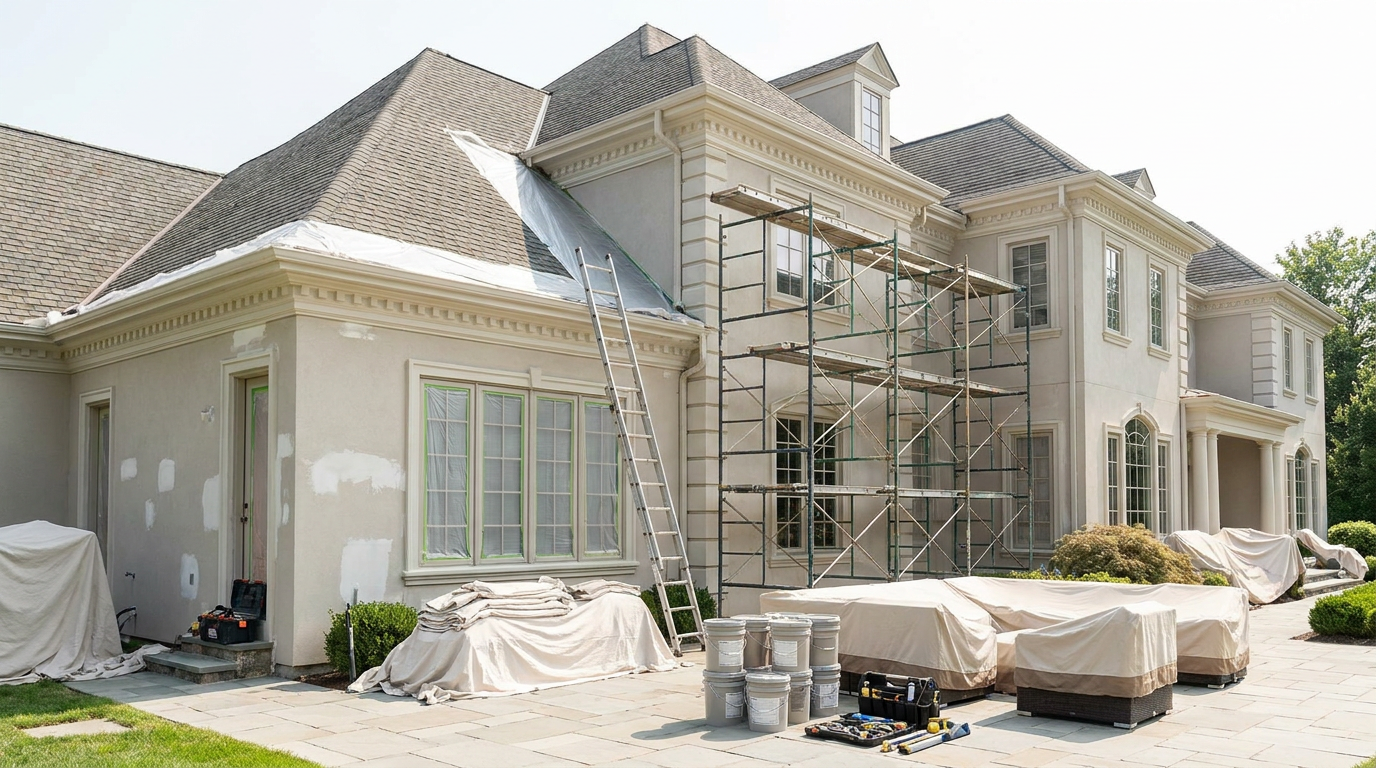
When prep is planned early, the estimate becomes easier to trust. These same issues are covered in the broader guide to house painting cost factors in Fairfield County.
Budget for Materials and Finish Expectations
Paint quality, primer, sheen, coating type, and finish expectations all affect budget. A project focused on a quick refresh may require a different product strategy than a project designed for longer durability, better washability, or a more refined finish.
Interior finishes should match the room. Exterior paints should match surface exposure. Cabinet coatings should match daily use. Deck stains should match wood condition and maintenance goals.
The material decision should support how the space will actually be used.
Timing Can Affect Project Planning
Timing matters when planning a house painting budget. Interior painting can often be scheduled throughout the year, but occupied homes may require room-by-room planning, access coordination, and daily cleanup.
Exterior painting depends more heavily on weather, temperature, moisture, and seasonal availability. In Fairfield County, spring, summer, and early fall can become busy for exterior projects, so planning earlier helps homeowners avoid rushed decisions.
Budget planning should include not only cost, but also when the project needs to happen.
Use the Estimate to Confirm the Real Scope
A painting budget is only a starting point until the estimate confirms the real scope. The walkthrough should connect your goals to the surfaces, prep work, repairs, materials, protection, timeline, and exclusions.
A good estimate helps turn a general budget into a clear project plan.
Before approving the work, homeowners should understand:
- What is included
- What is excluded
- What prep is needed
- What repairs may affect cost
- What products will be used
- How the home will be protected
- What the next step looks like
If you already have multiple proposals, the next step is to compare painting estimates by scope and value, not only by the final number.
House Painting Budget Planning Matrix
| Project Type | Budget Planning Focus |
| Single-room painting | Room size, wall condition, trim, color change |
| Full interior repaint | Rooms, ceilings, trim, doors, protection, scheduling |
| Exterior painting | Siding, trim, access, prep, repairs, weather timing |
| Cabinet painting | Doors, drawers, frames, prep, coating system, finish |
| Deck staining | Deck size, railings, cleaning, sanding, stain type |
| Drywall touch-ups | Patch size, blending, priming, paint matching |
| Pre-sale painting | Priority rooms, curb appeal, neutral colors, timing |
| Whole-home painting | Full scope, phasing, access, protection, finish level |
A Better Budget Starts With Priorities
Not every painting project needs to happen at once. Some homeowners start with high-impact rooms, exterior trim, cabinet painting, or areas that show the most wear. Others plan a larger refresh before selling, moving in, or updating the home for long-term use.
A better budget starts by ranking the work:
- What needs attention first?
- What affects daily use?
- What affects curb appeal?
- What protects the home?
- What can wait for a later phase?
This helps homeowners make practical decisions without reducing the project to the lowest possible price.
House Painting Budget Planning FAQs
How should I start planning a painting budget?
Start by identifying the type of project, the areas involved, surface condition, timing, and finish expectations. A walkthrough can then turn that general plan into a written estimate with clearer scope.
Should I budget separately for interior and exterior painting?
Yes. Interior and exterior painting have different prep, protection, products, timing, and labor needs. Separating them makes the budget easier to understand and compare.
Do cabinets and decks need separate budget planning?
Usually, yes. Cabinet painting and deck staining have different preparation and finish requirements than standard wall or siding painting. They should be reviewed as their own project areas.
How much extra should I plan for prep or repairs?
The amount depends on the home’s condition. Instead of guessing, the estimate should identify prep needs such as patching, sanding, scraping, caulking, priming, or wood repair before work begins.
Can I phase a painting project over time?
Yes. Many homeowners phase work by priority, such as main living areas first, exterior trim next, or cabinets later. A written estimate can help organize the project into practical phases.
Plan Your Painting Budget With a Clear Estimate
A painting budget becomes more useful when it is connected to real project scope. Before choosing a company, make sure the estimate explains surfaces, prep, repairs, materials, protection, timing, and what happens next.
Regal Line House Painters helps Fairfield County homeowners plan residential painting projects with written estimates, careful walkthroughs, and practical guidance for interior, exterior, cabinet, deck, and specialty painting needs.

What Happens Next
- We review your project type and priorities
- We identify surfaces, prep, repairs, and finish needs
- We explain what should be budgeted now or later
- You get a written estimate that helps you plan with confidence
Plan by scope • Budget for prep • Clear estimates make better decisions