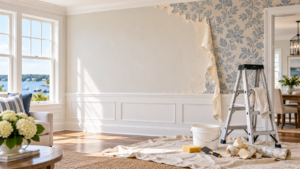
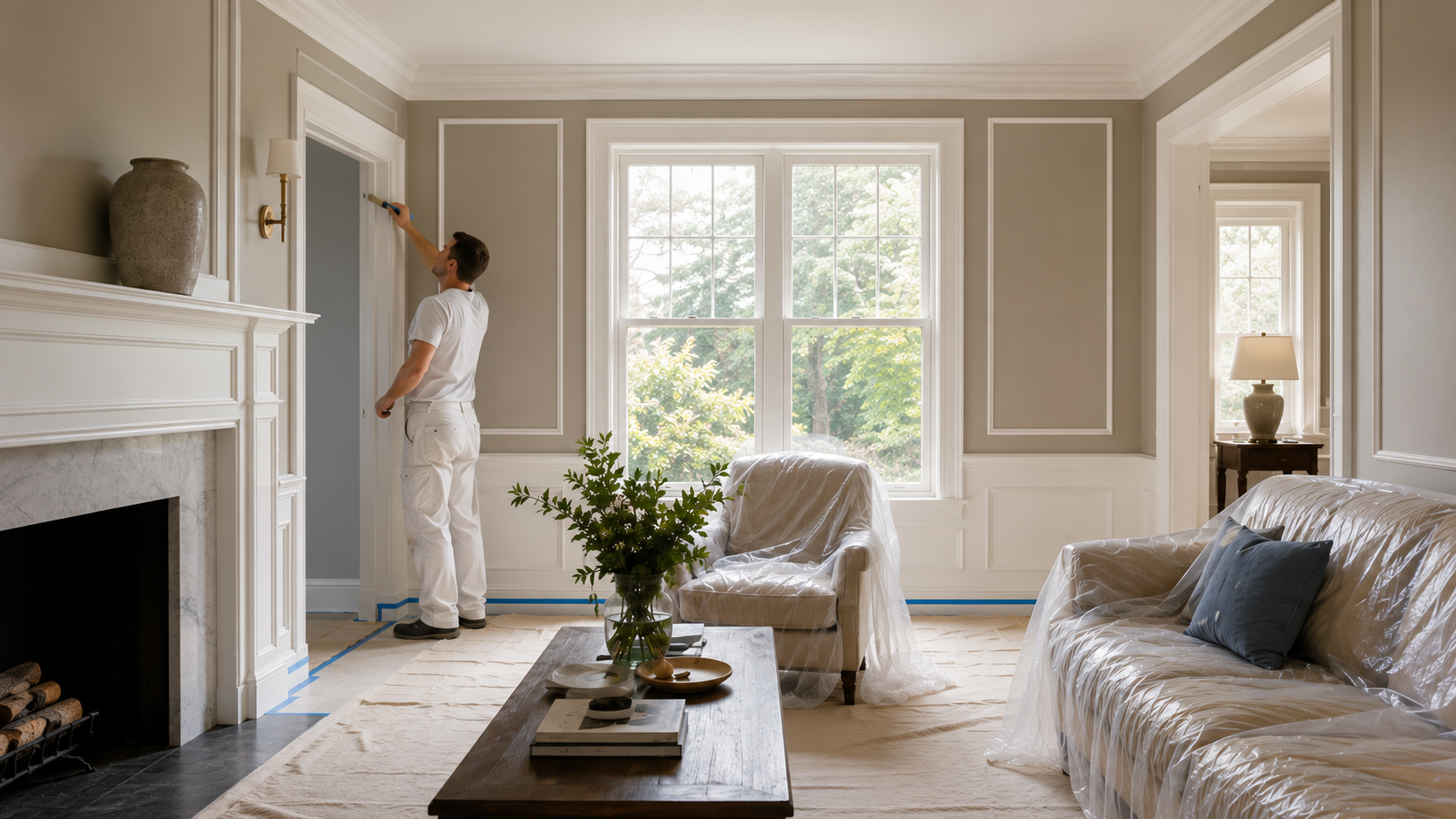
You can repaint the interior of a lived-in New Canaan home without upending daily life if the crew works room-by-room, seals off work zones, protects floors and furniture every day, and uses low-odor, fast-recoat products.
The detail that takes the most skill here is the trim work: the built-ins, wainscoting, crown molding, baseboards, window casings, and tall stair halls common in many of New Canaan’s older homes.
Repainting a lived-in New Canaan, CT home often means working inside an older colonial, a trim-heavy home from the 1940s through the 1960s, or a detailed interior where daily life cannot simply stop for two weeks.
Homeowners here rarely move out for a paint job, so the real question is not only “what will it look like?” It is also “what will the next several days or weeks feel like?” Homeowners planning interior work locally can also review Regal Line’s New Canaan, CT house painting service area for city-specific painting guidance.
Here is how a careful crew keeps an occupied home protected, usable, and organized while the repaint moves room by room.
What Occupied-Home Painting Really Means
Occupied-home painting means the crew works around your family, not the other way around. That changes everything from the daily schedule to how work zones are contained, how pathways are protected, and how rooms are cleaned at the end of each day.
The goal is a home that stays usable while the work moves through it. Kitchens should remain planned around. Bedrooms should stay reachable. Entryways should stay safe. The front door, stairs, and main walkways should not feel like a construction zone every night.
A good occupied-home repaint is not only about the finished walls. It is about keeping the process calm enough that the home still feels manageable while the work is underway.
Protecting Floors, Furniture, and Daily Life
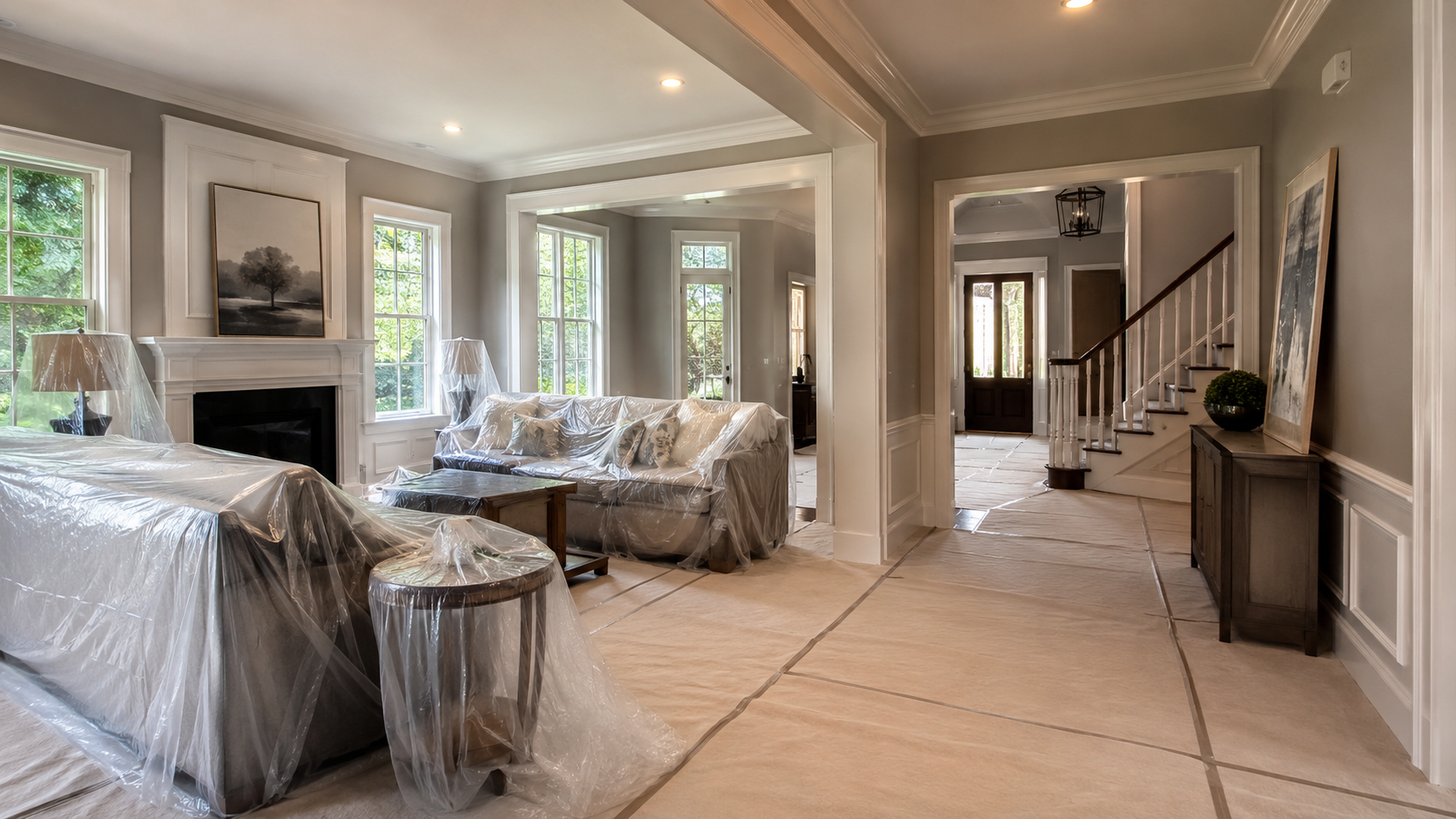
Protecting floors, furniture, and daily life starts before the first coat of paint. Floors need to be covered and taped, furniture should be moved to the center and wrapped or relocated, and the main pathways through the home should stay clear.
A tidy job site is not a small detail in a lived-in home. It is the difference between a repaint that feels controlled and one that becomes stressful after the first day.
A careful occupied-home setup should include:
- Floor protection in work areas and main walkways
- Furniture moved, wrapped, or relocated room by room
- Dust control near thresholds and adjacent rooms
- Clear access to kitchens, bedrooms, bathrooms, and stairs
- Daily cleanup before the crew leaves
- Communication about which spaces are available each day
This is especially important in homes with detailed trim, built-ins, finished wood floors, and high-traffic family spaces.
Trim, Built-Ins, and Wainscoting Need a Slower Hand

Trim, built-ins, and wainscoting are where an interior painting job is often won or lost. New Canaan’s older homes tend to be detail-heavy, with deep baseboards, crown molding, paneled built-ins, window casings, stair trim, and formal rooms where every edge is visible.
Each of those edges is a place where a rushed crew can leave a wavy line, a paint bleed, or an uneven sheen. Crisp lines come from careful masking, sanding between coats where needed, steady brushwork, and durable enamel products that level smoothly.
If the project includes the kitchen, built-ins, or specialty millwork, the planning becomes even more important because cabinets are the most trim-heavy surface in the house.
Stair Halls and High Ceilings Require Safe Access

Stair halls and high ceilings need proper access equipment, not a wobbly ladder balanced on a step. Tall two-story stair halls are common in New Canaan homes and are among the trickiest areas to paint cleanly and safely.
The challenge is not only reaching the wall. It is protecting stair treads, railings, landings, trim, light fixtures, and adjacent spaces while maintaining clean lines at height.
Before work starts, ask how the crew plans to access stair halls, high ceilings, and tall trim areas. A serious interior scope should explain the setup, protection, and sequence clearly.
Dust, Odor, and Dry Time Day to Day
Dust, odor, and dry time are the three things homeowners actually feel during an interior repaint. Sanding creates dust, so containment, cleanup, and careful sequencing matter. Low-odor, fast-recoat products can help rooms return to use sooner.
A good crew should tell you, room by room, what to expect and when a space is ready to use again. That includes when furniture can move back, when windows can be closed, and when fresh trim or doors should be handled carefully.
Occupied-home painting works best when the homeowner is not guessing what comes next.
Sequencing Rooms So Your Home Stays Livable
Sequencing rooms keeps at least part of your home usable throughout the project. Rather than opening the whole house at once, a thoughtful plan works in a logical order.
That may mean keeping the kitchen available, preserving access to primary bedrooms, finishing children’s rooms in a planned window, or saving hallways and stair areas for a specific phase.
A livable repaint usually depends on daily rhythm:
- Which room is active today?
- Which room is drying?
- Which areas should the family avoid?
- Which pathways stay open?
- What gets reset before the crew leaves?
The better the sequence, the less chaotic the project feels.
What a Written Interior Scope Should Include
A written interior scope should list the rooms, surfaces, prep, product, sheen, and number of coats so nothing is assumed.
Regal Line works from how we handle interior painting in lived-in homes and written, itemized scopes because occupied-home painting needs a clear plan before the first room is opened up.
It is also worth reviewing how to prep a home before the crew arrives so the first day starts smoothly.
Before approving an interior repaint, homeowners should understand:
- Which rooms are included
- Whether ceilings are included
- Whether trim, doors, and closets are included
- What repairs or sanding are part of the scope
- Which products and sheens will be used
- How furniture and floors will be protected
- How the home will be cleaned and reset each day
- What the room-by-room schedule looks like
Occupied-Home Interior Painting Planning Matrix
| Project Area | Planning Focus |
| Living rooms and family rooms | Furniture protection, wall repairs, sheen consistency, daily access |
| Kitchens | Usability, trim detail, odor control, timing around daily routines |
| Bedrooms | Room-by-room sequencing, drying time, furniture reset |
| Stair halls | Safe access, high walls, rail protection, clean cut lines |
| Built-ins and wainscoting | Sanding, masking, enamel finish, crisp detail work |
| Trim and doors | Durable finish, edge control, handling time, smooth sheen |
| Hallways | High-traffic protection, patching, daily cleanup, open pathways |
| Home offices | Scheduling around work hours, dust control, fast room return |
A Calm Interior Repaint Starts With Process
A lived-in repaint should never feel like every room has been opened at once. The process should move through the home in a way that protects the family’s routine and gives the crew enough control to do clean work.
The best interior painting projects usually have a clear daily plan, clear protection standards, and a scope that explains exactly what happens before paint goes on the wall.
For New Canaan homes with detailed interiors, trim packages, and older layouts, that process matters just as much as the final color.
Interior Painting in an Occupied New Canaan Home FAQs
Can you paint a house interior while we are living in it?
Yes. With room-by-room sequencing, sealed work zones, daily protection and cleanup, and low-odor products, most homes can stay livable throughout the project.
How do painters keep dust and mess down indoors?
Painters control dust and mess by containing work areas, covering floors and furniture, managing sanding dust, keeping pathways clear, and resetting the space at the end of each day.
How long does interior paint take to dry and cure?
Most walls are touch-dry in a few hours and can often be recoated the same day, depending on the product and conditions. Full cure takes longer, so the crew should explain when each room is ready for normal use.
What is the best finish for trim and built-ins?
Trim and built-ins usually need a durable enamel that levels smoothly and stands up to touch, cleaning, and daily wear. Trim often uses a higher sheen than walls for durability and sharper detail.
Do we need to move all our furniture out?
Usually not. Furniture is often moved to the center and protected, or relocated room by room, rather than removed from the home entirely.
Plan an Interior Repaint You Can Live Through
An interior repaint in a lived-in home should be planned around more than color. It should account for room sequencing, floor protection, furniture, dust, odor, trim detail, stair halls, dry time, and daily cleanup.
Regal Line House Painters helps homeowners plan interior painting for New Canaan’s older homes with written scopes, careful protection, and a process built around keeping the home usable while the work is underway.
What Happens Next
- We review rooms, trim, built-ins, stair halls, and daily access needs
- We identify protection, prep, dust control, product, and sheen requirements
- We explain the room-by-room interior scope before work begins
- You get a written estimate that helps you plan the project with confidence
Room-by-room planning • Protected trim and floors • A calmer interior repaint