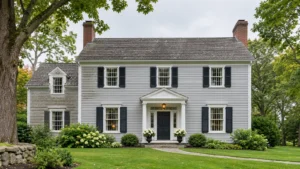
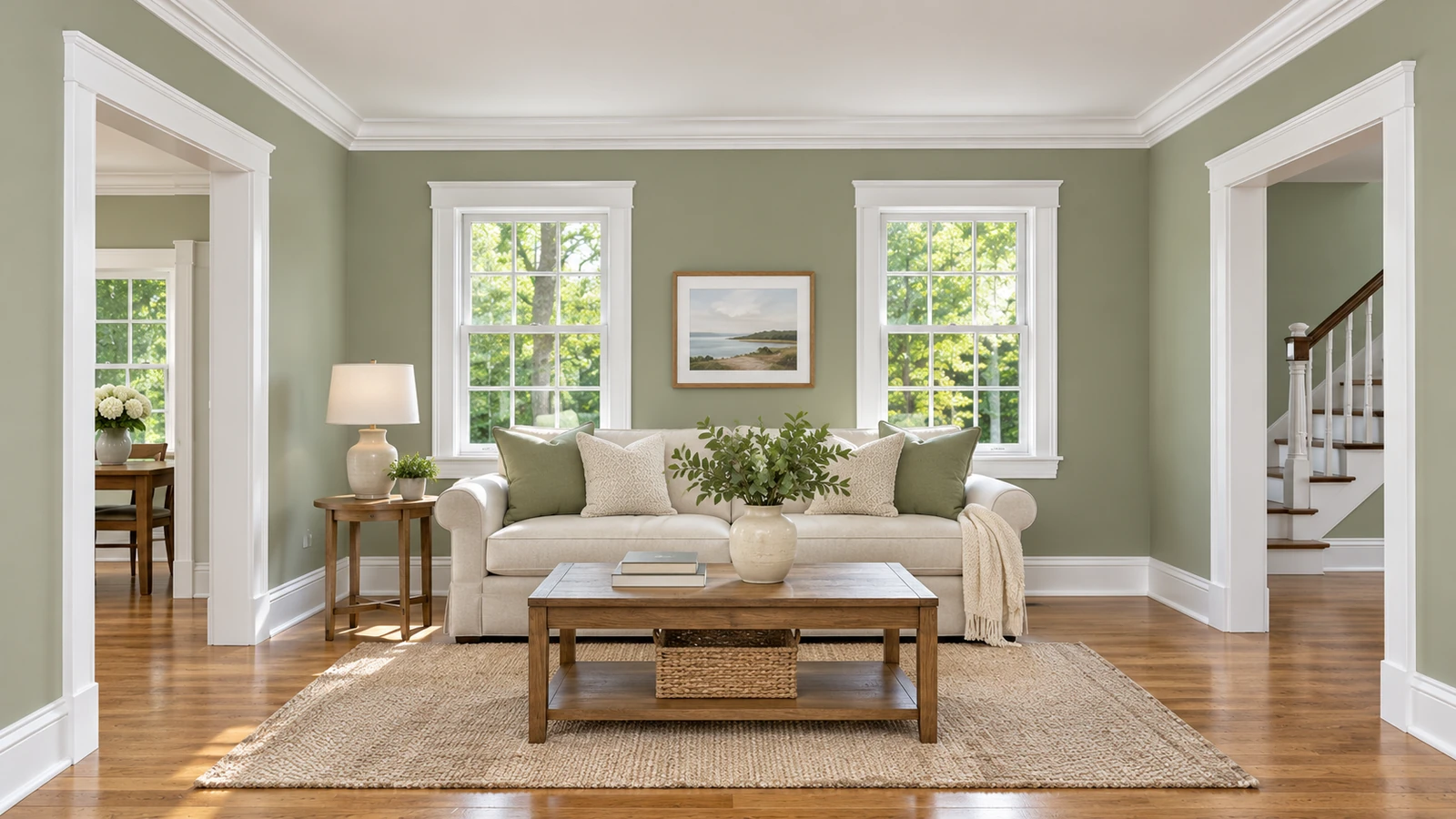
Trim painting scope in Westport, CT should identify the faces you want refreshed and the walls or finishes you want to keep. Define those boundaries before pricing, including whether doors, shelves or built-ins are separate parts of the project.
You may still like your wall color or wallpaper and want the woodwork to feel more finished. At Regal Line House Painters, we can discuss that goal within your interior painting plan. The first step is to identify what needs attention and whether a focused scope fits the condition and extent of the work.
A trim refresh starts with what you want to preserve
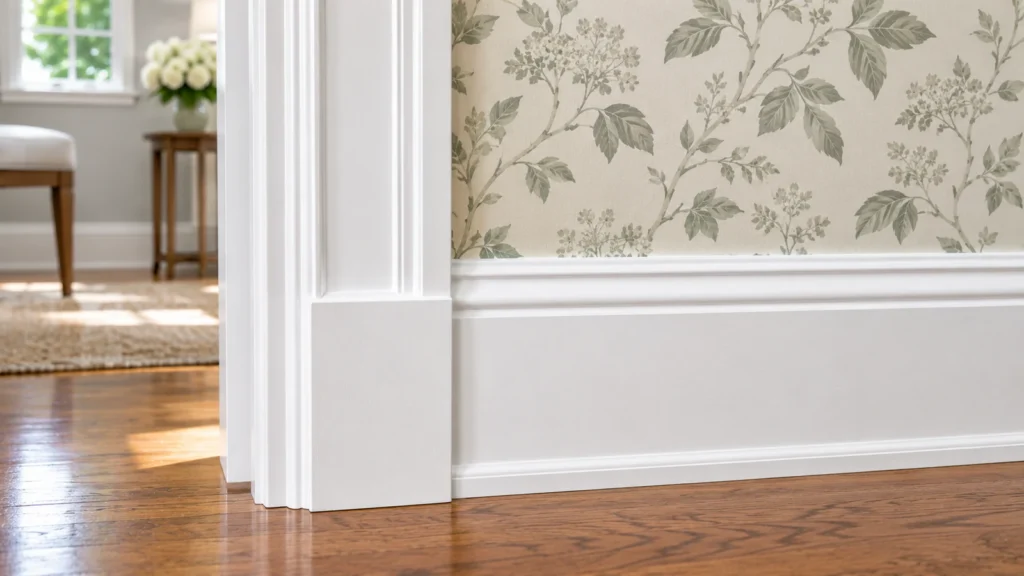
A trim-only refresh should name the woodwork being painted and the neighboring finishes being preserved. Doors, shelves, cabinet interiors and wall touch-ups are not interchangeable with trim; each needs an explicit inclusion or exclusion. Existing coating condition and protection requirements can change the final scope.
Begin by describing the room as you want to keep it. That might mean retaining a patterned wall, a ceiling color, natural flooring or selected built-ins. Then identify the pieces you want repainted. This is a more useful brief than asking for “all the white woodwork” without defining the boundaries.
Check the faces, the edges and the separate items
| Element | Faces and boundaries to name | What stays protected | Confirm separately |
|---|---|---|---|
| Baseboards and shoe molding | Each run and whether both pieces are included. | Wall finish and flooring. | Replacement pieces, repairs and furniture access. |
| Door casing and jambs | Casing, jambs and returns as distinct components. | Adjacent painted or wallpapered walls. | The door leaf, hardware and edges. |
| Window trim | Casing and any sill or apron within the scope. | Glass and the surrounding wall finish. | Sash, moving parts and restoration work. |
| Crown molding and decorative trim | The included runs, corners and stopping points. | Existing ceiling and wall finishes. | Adjacent touch-ups or repainting. |
| Shelves and built-ins | Which units and exposed faces are included. | Nearby walls, objects and retained finishes. | Doors, interiors, fixed shelving and return-to-use instructions. |
Use the same list when reviewing the estimate and at the final walkthrough. If an item is not named, ask about it rather than assuming it is covered by the word “trim.”
Can the walls and wallpaper stay as they are?
Preserving them can be the goal, but the condition of the boundary matters. Discuss loose edges, earlier paint marks, damaged joints or areas where a wall repair meets the trim. Those details can affect whether a clean, focused result is achievable without additional work.
Ask what protection is planned and what happens if an adjacent surface needs attention. A written exclusion is useful only if you understand its practical effect. For example, leaving wall touch-ups outside the price is different from promising that no wall repair will be needed.
When you explore our interior painting and trim services, describe both the desired change and the finishes that should remain. A broader repaint and a focused trim scope should not be priced as though they were the same project.
Choose the finish beside the surfaces you are keeping
Look at a proposed white or other trim color next to the existing wall finish, flooring and fixed materials. Compare it in the room rather than approving it only on a phone screen. The goal is a combination you like, not an assumption that every product called white will look the same.
Sheen is another part of that choice. Benjamin Moore’s guide to paint finishes explains sheen in terms of reflected light and shows different uses for finishes. For your project, confirm the specific product and surface requirements rather than choosing gloss by tradition alone.
Also ask how the current coating will be assessed before repainting. Selecting an attractive topcoat does not remove the need to consider the finish already on the woodwork.
Our Westport playroom trim project
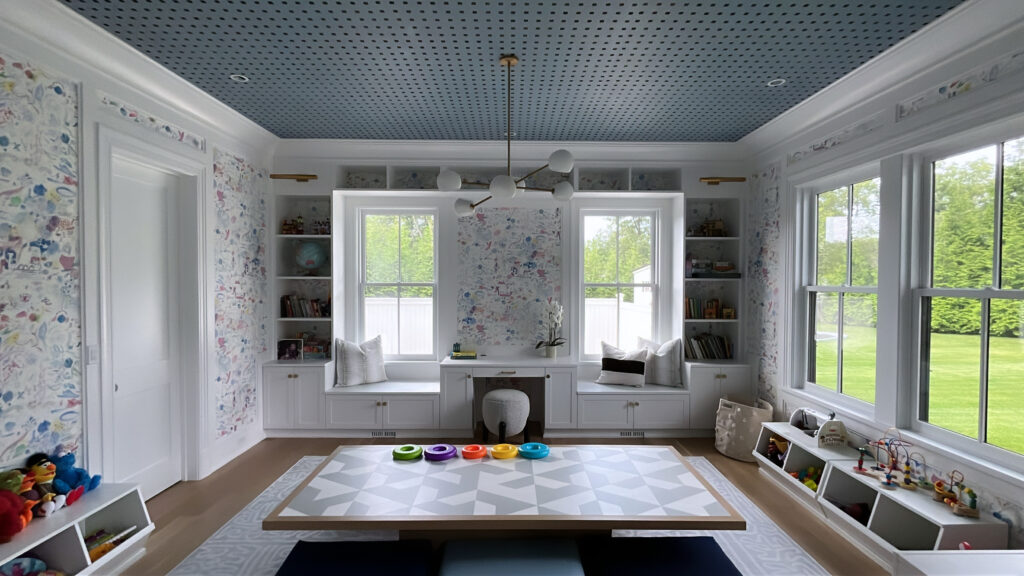
We completed trim painting in a Westport playroom with patterned walls and a blue ceiling. Our Westport playroom trim project provides an example of focused painting within a room that already has a distinctive character.
For your room, identify the edges and components that matter most to the result. You may want a similar emphasis on the woodwork without changing the whole room; the scope still needs to be tailored to your surfaces, condition and priorities.
Plan for handling, storage and daily room use
A baseboard, a door and a shelf do not have the same day-to-day use. Before scheduling, tell us which doors must remain usable, whether children or pets regularly use the room and which shelves or cabinets need to be emptied.
Ask for instructions specific to the chosen coating before closing freshly painted doors, returning objects to shelves or cleaning the new finish. Do not assume a surface is ready for normal handling simply because it looks dry. The product and conditions determine the relevant instructions.
- Confirm what the household will move before work starts.
- Separate fixed items from objects that can be removed.
- Agree on any restrictions around doorways or work areas.
- Keep return-to-use and care guidance with the completed scope.
Questions about a focused trim refresh
Does trim painting automatically include doors?
No. Door leaves, casing, jambs and hardware should be discussed separately. Name the components and faces you want included.
Are built-ins part of the same estimate?
They can be discussed, but they should have their own surface list. Exposed faces, doors, shelving and cabinet interiors can involve different inclusions and use requirements.
Can we keep our wallpaper?
That can be part of the brief. The condition of the wallpaper and the boundary with the trim should be assessed before the scope and protection plan are finalized.
Do we need to repaint every wall to change the trim color?
Not as an automatic rule. The intended appearance, existing condition and edge work determine whether a focused scope is appropriate or whether adjacent work should be discussed.
Can this be one part of a larger interior project?
Yes, it can be discussed as a defined part of an interior plan. Tell us the full goal so the surfaces and sequence can be considered together, rather than treating each item as an unrelated request.
Define what changes and what stays in your Westport home
Our house painters serving Westport, CT can discuss your priorities as part of an interior painting assessment. Share the rooms involved, the woodwork you want refreshed and the finishes you would like to retain.
For business information and customer feedback, see Regal Line House Painters — Westport painting services on Google.