Paint Peels Faster Near the Coast in Fairfield County when salt air, moisture exposure, slow drying, surface stress, and weak earlier prep combine to shorten the life of the coating system.
Coastal Exposure Changes How Exterior Paint Ages
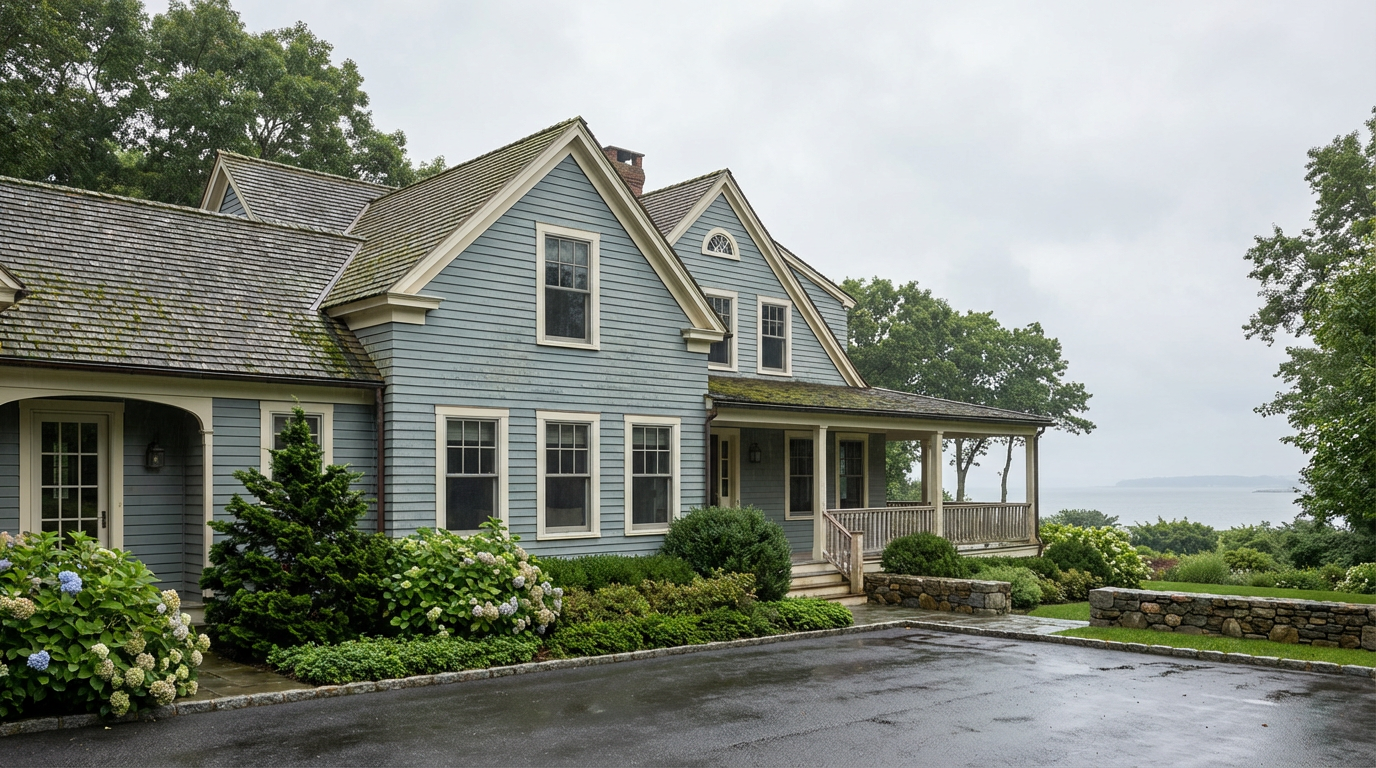
Many homeowners notice that exterior paint begins breaking down faster near the coast and assume the product itself is the only problem. In reality, coastal exposure changes how the whole paint system performs over time.
Near the coast, exterior surfaces may deal with:
- heavier moisture exposure
- salt air stress
- stronger wind-driven weather
- slower drying in shaded sections
- trim and edges wearing faster
- earlier weakness in already vulnerable areas
That is why two homes in the same county can age very differently when one is under more coastal pressure than the other.
Salt Air and Moisture Put More Stress on Exterior Surfaces
One of the biggest reasons paint can fail faster near the coast is the combined effect of salt air and dampness.
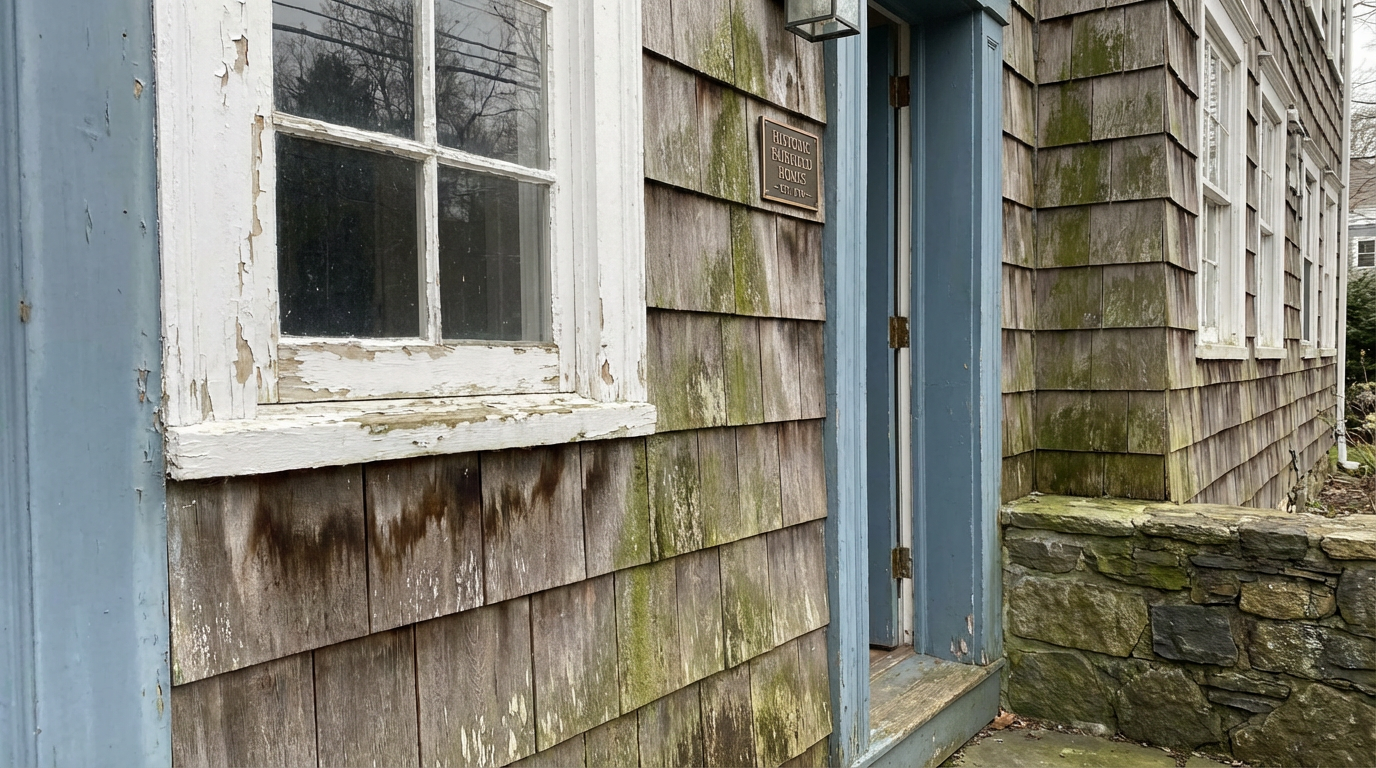
Those conditions can make it harder for the coating system to stay stable over time, especially when the home already has:
- worn trim
- weak edges
- older paint layers losing adhesion
- moisture-prone sections
- surfaces that were not fully stabilized before repainting
Coastal conditions do not always cause instant failure. More often, they speed up breakdown in areas that were already under stress. Homeowners comparing broader protection priorities may also want to review exterior painting and the company’s process before planning the next cycle.
Quick Table — Why Coastal Paint Fails Faster
| Coastal Factor | What It Changes | What Homeowners Often Notice |
| Salt Air | Adds stress to exposed surfaces | Faster wear on trim and edges |
| Moisture | Weakens stability over time | Peeling, bubbling, slower drying |
| Wind Exposure | Increases weather pressure | Uneven aging across elevations |
| Shade | Keeps surfaces damp longer | Early weakness on protected sides |
| Weak Prep | Reduces long-term hold | Failure showing sooner after repaint |
Weak Prep Becomes More Visible in Coastal Conditions
A home may look freshly painted at first, but if prep was too light, coastal exposure often reveals those weaknesses sooner.
That may happen when the earlier project included too little:
- washing
- scraping
- sanding
- caulk correction
- cleaning of weathered surfaces
- stabilization of failing trim or edges
In coastal conditions, weak prep tends to lose ground faster because moisture and exposure keep pressing on the same vulnerable points. It can help to review what a house painting estimate should include in Fairfield County and related power washing considerations before work begins.
Some Parts of the House Fail Faster Than Others
Paint breakdown near the coast does not usually happen evenly across the whole home, especially on horizontal surfaces like decks. Deck stain vs deck paint.
The areas most likely to weaken first often include:
- weather-facing elevations
- lower sections where dampness lingers
- trim details and edges
- corners and transitions
- shaded sides that dry more slowly
- surfaces already carrying older wear
This is one reason a homeowner may see peeling or breakdown on one elevation while the rest of the house still looks relatively sound. Homeowners comparing related durability patterns may also want to review how long exterior paint lasts in Fairfield County and broader Fairfield County service coverage.
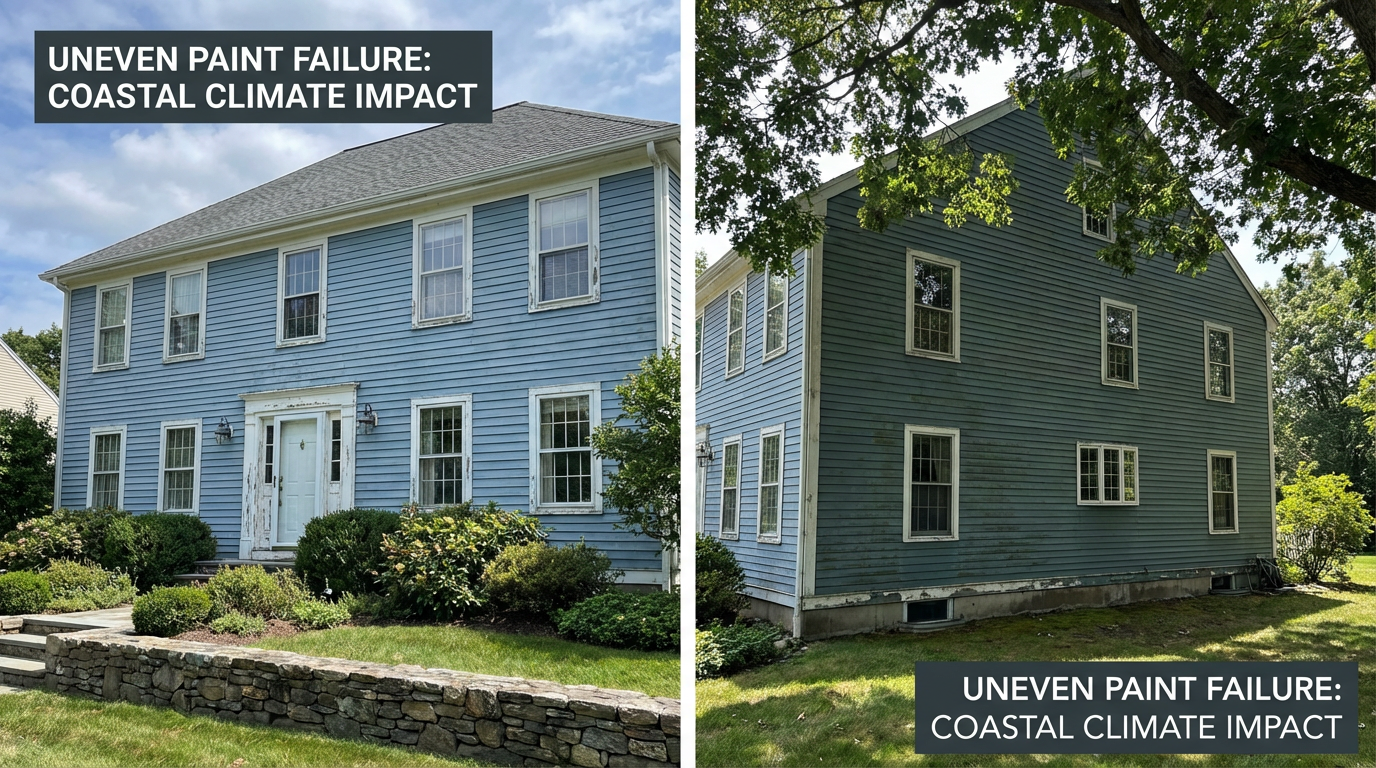
Shade, Wind, and Slow Drying Also Matter
Coastal stress is not only about salt air. The way the home dries after rain, moisture, and seasonal weather also affects durability—especially on edges and joints that fail first. How long exterior paint lasts in Fairfield County.
Paint may weaken faster when the home has:
- shaded sections that stay damp longer
- surfaces hit by repeated wind-driven weather
- trim details with more exposure than broad siding areas
- older sections that never fully dry as evenly as healthier surfaces
This combination often shortens paint life even when the broad field surfaces still appear acceptable at first glance.
Why Coastal Paint Failure Is Often a System Problem
When paint starts peeling or wearing faster near the coast, the issue is usually not only the topcoat itself.
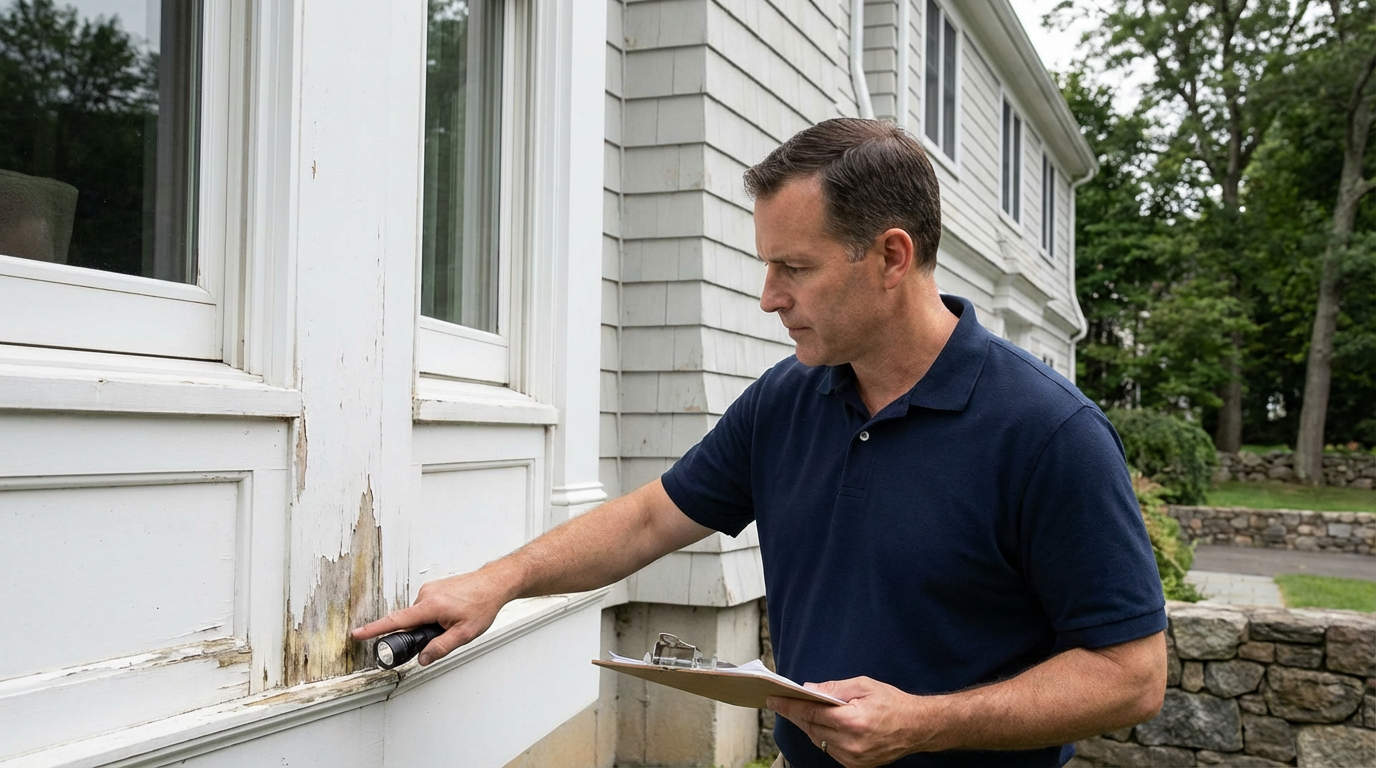
More often, it is a broader system problem involving:
- surface condition before repainting
- prep depth
- moisture exposure
- older coating instability
- vulnerable trim or transition areas
- local weather stress over time
That is why the better question is not only “what paint was used?” but “what kind of surface and exposure was that paint being asked to hold onto?” For homeowners comparing project planning next steps, it may also help to review pricing or request an estimate after the exterior has been reviewed more clearly.
How Homeowners Should Think About Coastal Paint Failure More Clearly
A better coastal durability review looks at:
- how exposed the home really is
- where moisture is lingering
- whether trim and edges are weakening first
- how well the surface was prepared before repainting
- whether some elevations are aging much faster than others
That gives a much clearer view of why the exterior is failing and what needs to be corrected before the next repaint cycle can hold more reliably. Many homeowners also compare exterior painting with a closer review of what a house painting estimate should include in Fairfield County before deciding how to move forward.
Paint Peels Faster Near the Coast in Fairfield County FAQ
Why does paint peel faster near the coast?
Coastal homes often deal with more moisture, salt air, wind-driven weather, and slower drying, which can put more stress on weak exterior areas.
Does salt air alone ruin exterior paint?
Not by itself. Salt air becomes more damaging when combined with moisture, vulnerable trim, weak prep, and aging earlier coatings.
Why do some areas peel before others?
Different elevations handle exposure, shade, dampness, and wind differently, so they rarely age at the same pace.
Can weak prep make coastal paint failure worse?
Yes. Coastal conditions tend to expose weak prep sooner because the surface stays under more environmental stress.
Does this mean every coastal home needs repainting sooner?
Not automatically, but coastal homes usually need a more exposure-aware review because vulnerable areas often weaken earlier.
Get a Clearer Coastal Exterior Review
If your home is closer to the coast and exterior paint is starting to wear faster, the most useful next step is to review how exposure, moisture, trim condition, and earlier prep are affecting the surface now.
A better exterior review helps homeowners understand where the paint system is still holding, where coastal stress is accelerating failure, and what needs to be corrected before repainting can deliver a more stable result.
Regal Line helps Fairfield County homeowners with clearer exterior reviews, documented prep expectations, and repaint planning built around actual coastal and inland exposure patterns.
What Happens Next
- We confirm your location and project type
- We review the exterior surfaces and visible wear
- We identify likely exposure and prep-related factors
- We prepare a written estimate based on real conditions
Coastal exposure matters • Moisture weakens coatings • Prep affects durability