On New Canaan’s shaded, wooded lots, exterior paint tends to fail early because tree canopy keeps siding damp long after rain. Trapped moisture feeds mildew, breaks adhesion, and freeze-thaw cycles widen the damage each winter.
The fix is prep-first: wash and treat mildew, let the wood dry, spot-prime bare wood, and use breathable, mildew-resistant coatings on the shaded elevations.
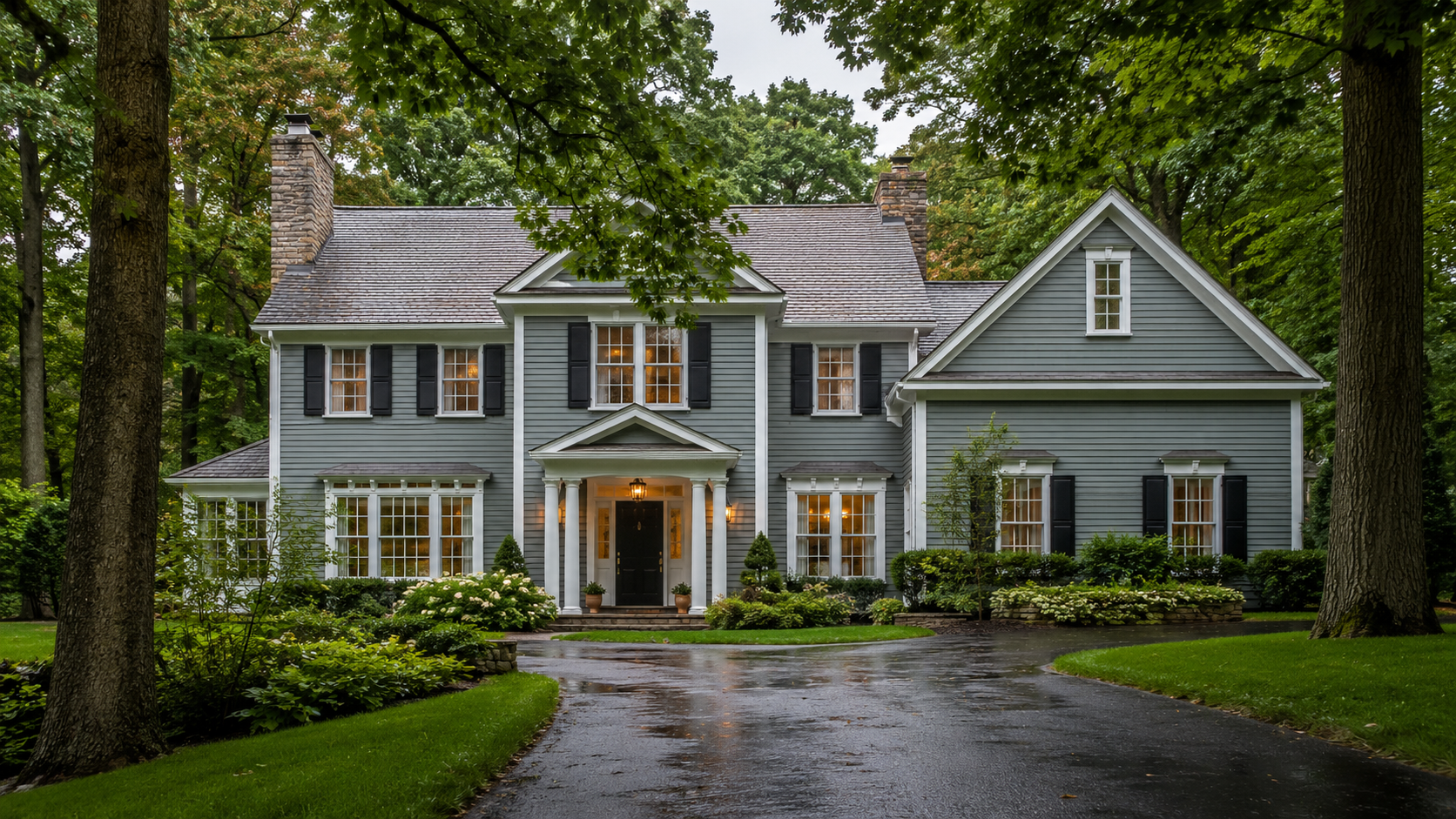
New Canaan is a leafy town. Mature tree canopy shades much of the housing stock, from the estate lots along Oenoke Ridge to the larger wooded parcels around Silvermine. That shade is beautiful, but it can shorten the life of an exterior paint job when the surface never fully dries.
On heavily shaded lots, exterior paint often fails years earlier than it would on an open, sunny lot. The cause is usually moisture, not simply paint quality. Homeowners planning exterior work locally can also review Regal Line’s New Canaan, CT house painting service area for city-specific painting guidance.
Here is what actually happens, how to spot it, and the prep that helps a repaint last.
What Tree Canopy and Shade Do to Exterior Paint
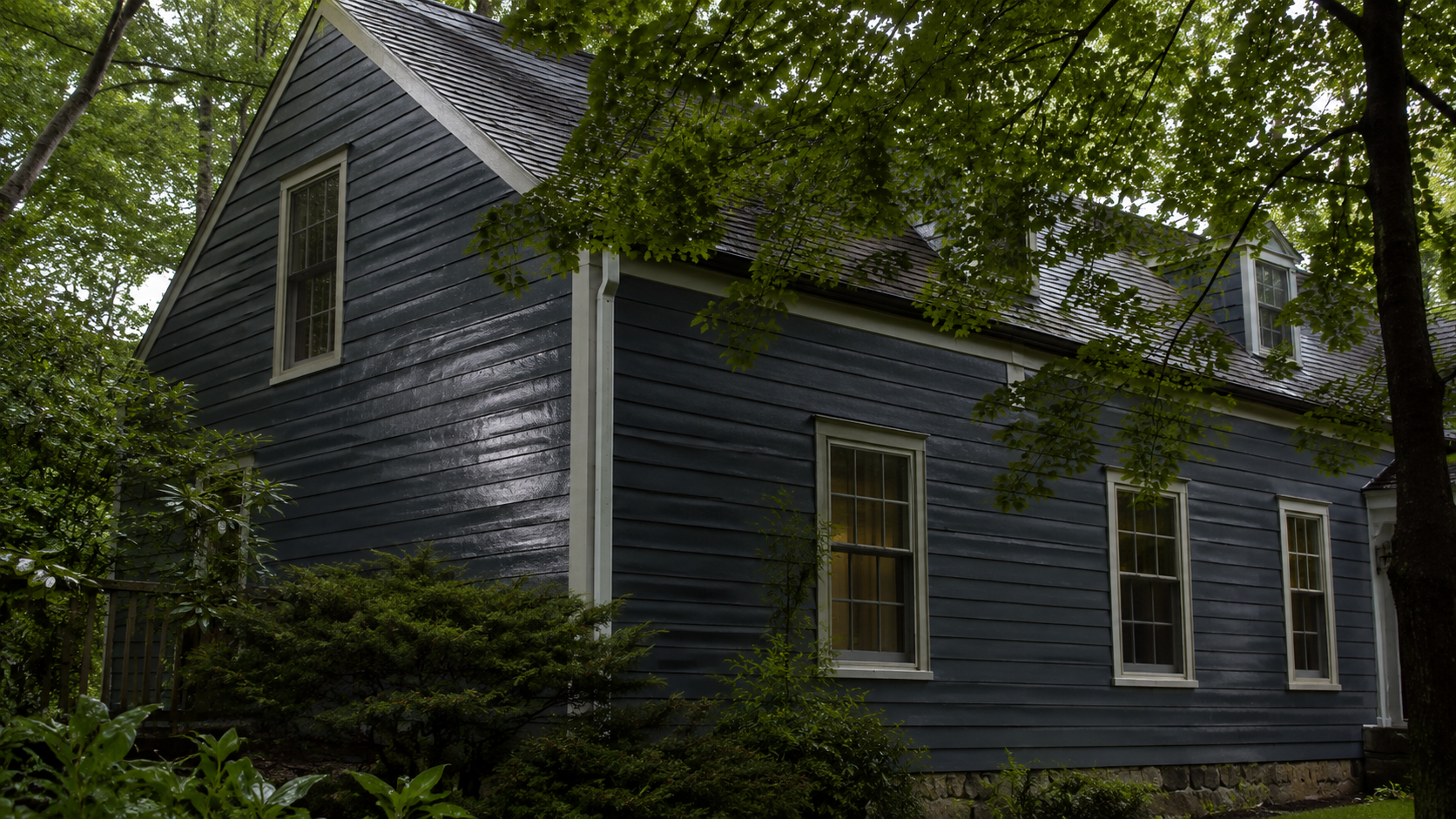
Tree canopy and shade keep siding damp far longer than most homeowners realize. On open, sunny walls, moisture may dry within hours. Under trees, shaded siding can stay damp for days, especially on north-facing walls, low siding, trim, and areas under deep eaves.
Wood that never fully dries becomes a hospitable surface for mildew and algae. A damp substrate is also one of the biggest enemies of paint adhesion.
Paint is designed to shed water from the outside. It is not designed to hold back moisture pushing from behind or below. On a shaded lot, that is often the pressure it faces, which is why the same product can last well on one house and struggle on another house nearby.
Signs Your Paint Is Failing From Moisture, Not Age
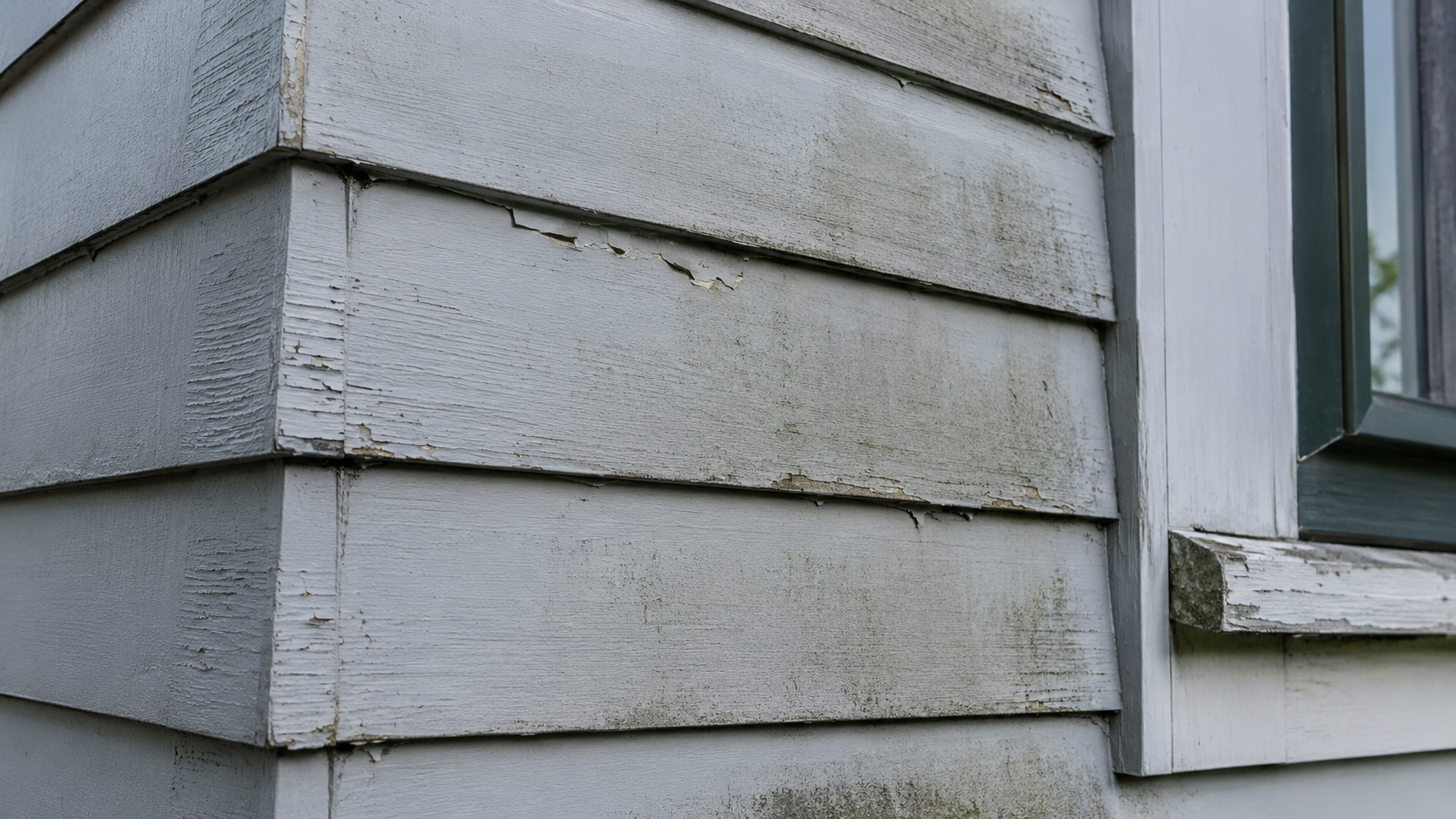
The clearest signs your paint is failing from moisture, rather than simply aging out, are mildew streaks, peeling along board seams, flaking near end grain, and blistering concentrated on the shaded side of the house.
Paint that has reached the end of its life tends to fade and chalk more evenly across multiple elevations. Moisture failure is usually more lopsided.
Common signs include:
- Grey, green, or black mildew streaks
- Peeling paint on shaded or north-facing walls
- Flaking near board seams and end grain
- Blistering where siding stays damp
- Soft or weathered trim in shaded areas
- Paint failure that appears worse on one side of the house
If one side of your home looks fine and the north or tree-facing side looks years older, moisture is likely part of the problem. Repainting without addressing it may only reset the clock for a season or two.
Which Elevations Fail First on Wooded Lots
On wooded lots, the elevations that usually fail first are the north-facing and tree-facing walls that never get enough direct sun to dry. These are also the walls homeowners often see least, so the failure may be well advanced before anyone notices.
Lower siding near grade, shaded soffits, trim tucked under deep eaves, and siding close to shrubs or tree cover are common early problem areas.
A useful exterior estimate starts by reading these elevations carefully. It should not treat every wall as if it faces the same exposure, dries at the same speed, or needs the same prep.
How Freeze-Thaw Winters Accelerate the Damage
Freeze-thaw winters accelerate paint failure because moisture trapped under the paint film expands as it freezes and contracts as it thaws. That cycle repeats throughout a Connecticut winter and can mechanically pry the coating away from the wood.
New Canaan’s inland, wooded setting can stay colder and damper than more open areas. If wood goes into winter carrying moisture, paint adhesion can become vulnerable before spring even arrives.
This is one reason shaded exterior walls should be evaluated differently than sunny, exposed elevations.
The Prep That Makes Exterior Paint Last Here
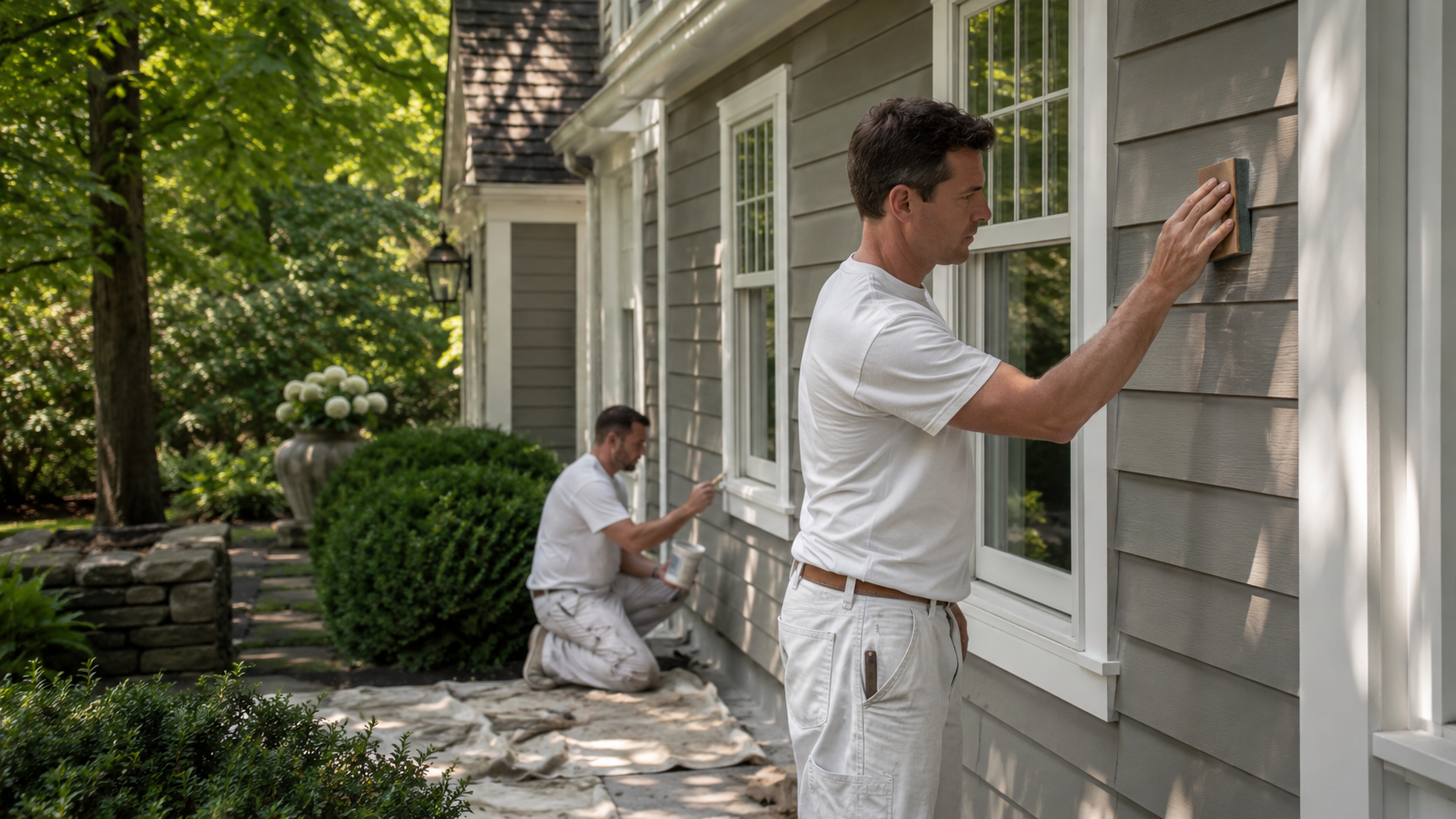
The prep that makes exterior paint last on a shaded lot is not glamorous, but it is where the durability comes from. The work should start with washing the surface, treating mildew at the root, allowing the wood to dry, spot-priming bare or exposed wood, and choosing coatings suited to shaded, damp elevations.
None of this is exotic. It is the difference between treating a shaded New Canaan home like an open colonial down the road and adjusting the project for the conditions in front of it.
Exterior Paint Prep for Shaded New Canaan Homes
| Prep Step | Why It Matters on Shaded Lots | What a Careful Crew Does |
| Wash and treat mildew | Painting over mildew can trap live spores under the film | Cleans and treats the surface instead of only rinsing it |
| Dry to spec | Sealing in moisture can lead to early paint failure | Waits for the wood to dry and checks before coating |
| Spot-prime bare wood | Bare wood and end grain absorb water and can lift paint | Primes bare spots, seams, and exposed end grain |
| Use breathable, mildew-resistant coatings | Helps residual moisture escape and resists regrowth | Specs products suited to shaded, damp exterior walls |
It is also why a slightly higher estimate can be the cheaper job over ten years. The value is not only in the finish coat. It is in the prep that helps the finish hold.
Best Time of Year to Repaint an Exterior in New Canaan, CT
The best time of year to repaint an exterior in New Canaan, CT is generally late spring through early fall, when temperatures are stable and surfaces have longer dry windows between prep and coats.
On shaded elevations, dry time is the constraint that matters most. Even in summer, a north-facing wall under trees may need more patience than a sun-baked front elevation.
A repaint pushed too late into the cold, damp shoulder season may go into winter vulnerable. That is why exterior timing should be part of the written scope, not an afterthought.
What to Ask for in a Written Exterior Scope
A written exterior scope should spell out the surface prep, mildew treatment, primer, product, number of coats, and which elevations need extra attention.
Regal Line works from our exterior painting process and written, itemized scopes for exactly this reason. “We’ll prep it” should become a specific, checkable list.
Before approving an exterior estimate, homeowners should understand:
- Which elevations are included
- Where mildew treatment is needed
- Which areas require scraping or sanding
- Where bare wood will be primed
- What products will be used on shaded walls
- How long surfaces need to dry before coating
- How the crew will protect landscaping and nearby surfaces
When you compare estimates, compare the prep, not only the price. Homeowners can also review how tree cover changes paint lifespan and peeling patterns on shaded vs. coastal walls.
If your deck sits under the same conditions, the same moisture logic applies. See if your deck sits under the same tree canopy.
Shaded Exterior Paint Failure Is a Scope Problem
Many homeowners think peeling paint is only a paint-product issue. On wooded New Canaan lots, it is often a scope issue.
The right question is not only “What paint will you use?” A better question is “How will you prepare the shaded elevations so the coating has a fair chance to last?”
That means a stronger estimate should account for moisture, mildew, drying time, bare wood, shaded trim, and the difference between sunny and damp elevations.
Shaded Exterior Painting Planning Matrix
| Condition | What It Usually Means |
| North-facing siding | Longer dry time and higher moisture exposure |
| Tree-facing elevations | More mildew risk and slower drying after rain |
| Peeling near seams | Moisture may be entering or escaping through vulnerable joints |
| Blistering paint | Moisture may be trapped beneath the paint film |
| Soft or weathered trim | Wood condition should be reviewed before coating |
| Deep eaves and shaded soffits | These areas may need extra cleaning, drying, and inspection |
| Mildew streaking | Surface should be washed and treated before repainting |
| Late-season repainting | Dry windows and overnight moisture become more important |
Exterior Paint on Shaded New Canaan Homes FAQs
Why does exterior paint peel faster on shaded, wooded lots?
Because shade keeps siding damp far longer. Trapped moisture breaks paint adhesion and feeds mildew, so the issue is usually moisture-related, not only a paint-quality problem.
How often should you repaint an exterior in New Canaan, CT?
It depends on siding, exposure, prep, and maintenance. Shaded, wooded elevations often need attention sooner than sunny walls, especially if mildew, peeling, or bare wood are already visible.
What is the best time of year to paint an exterior in Connecticut?
Late spring through early fall is generally best because surfaces have more stable drying windows. Shaded elevations need the most patience because they dry more slowly after rain or overnight moisture.
Does mildew mean the previous paint job was bad?
Not always. On damp, shaded lots, mildew can return even on good paint if the surface was not cleaned, treated, and allowed to dry properly before coating.
Can you paint over damp or peeling wood siding?
You can, but it will not last the way it should. Damp or peeling wood needs to be dried, scraped, sanded where needed, and primed before repainting.
Get a Clear Exterior Estimate for a Shaded New Canaan Home
A shaded exterior repaint should be planned around real conditions: moisture, mildew, tree cover, drying time, bare wood, prep, primer, coating choice, and seasonal timing.
Regal Line House Painters helps homeowners plan exterior painting for New Canaan’s wooded lots with written scopes, careful prep, and exterior painting guidance based on the way each home actually sits on the property.
What Happens Next
- We review shaded elevations, tree cover, siding, and trim condition
- We identify mildew, moisture, peeling, bare wood, and prep needs
- We explain the written exterior scope before work begins
- You get an estimate that helps you plan with confidence
Shade holds moisture • Prep protects adhesion • Clear exterior scopes reduce surprises